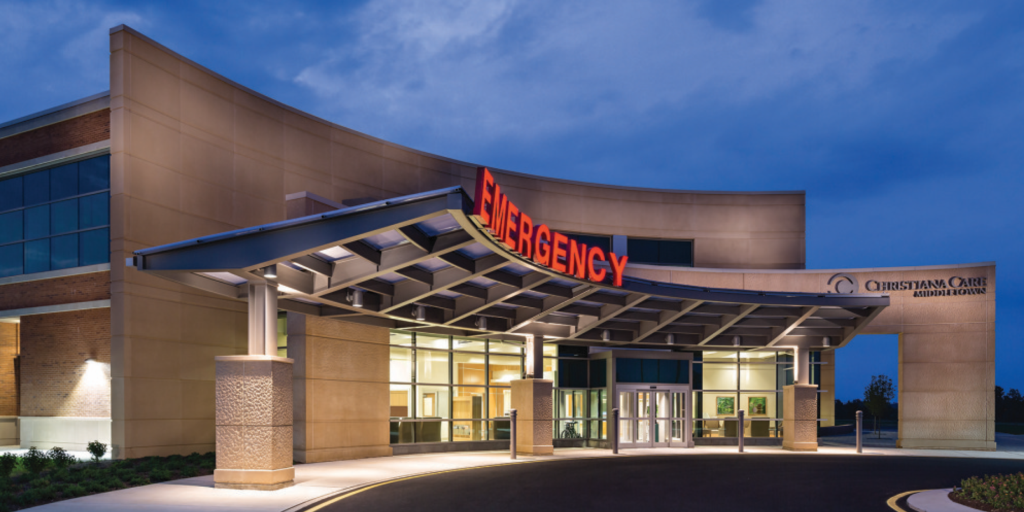
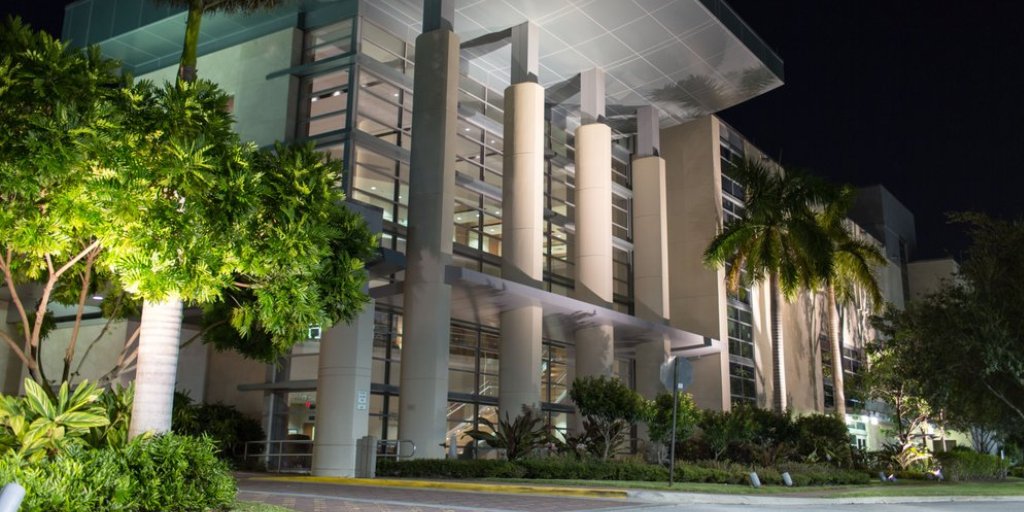
From the outside, the new Bayfront Health building in Pinellas Park looks like a typical medical clinic.
With its brick facade and modest parking lot, it could be an urgent care center or a doctor’s office. But it’s actually a free-standing emergency room, equipped to handle much more critical cases. The facility at Gandy Boulevard and Interstate 275 is the first of its kind for Bayfront Health, which operates a traditional emergency room just a few miles away at its downtown St. Petersburg hospital.
So why build another one?
To keep up with everyone else. Nearly every hospital chain is opening free-standing emergency rooms — commonly referred to as emergency departments, or EDs — to connect the dots between their major hospitals while cutting wait times and medical costs for consumers. They’re popping up everywhere in Tampa Bay.
“Larger hospital centers like Adventist or Bayfront Health see this as being part of their ‘extended tentacles’ into the community to provide access,” said Jay Wolfson, a professor at the University of South Florida’s Morsani College of Medicine. “One of the more profound parts of this phenomenon is that millennials are using these things extensively. Probably because there are lower wait times.”
As the health care industry evolves, most hospital operators are moving away from banking on sick people coming to their ERs. Instead, they are beefing up primary care and trying to keep patients out of the hospital. Many are opening urgent care clinics and creating telemedicine apps where patients can interact with doctors from their cell phone screens. Emergency departments offer yet another layer of care, just around the corner.
“The hospital is no longer the absolute center for health care in the community, unless it’s for intensive or emergency care,” Wolfson said. “But this is motivated by business as well. These health care companies are going to encourage people to go to these other sites, like free-standing EDs and preventative care services, as a way to introduce patients to their brand. Once you’re in the system, and you had a good experience, you’ll be more likely to return to that brand.”
Bayfront Health’s free-standing ED will open on Dec. 10. It will be manned by at least one trauma-trained physician and support nurse, plus technician and laboratory staff 24 hours a day, seven days week. The 8-bed unit is equipped with a resuscitation room, pediatrics care, radiology and lab services.
It also has a drive-up loop for ambulances. Bayfront Health is working with local paramedic providers to coordinate protocols for transporting patients to and from the facility.
It will be able to handle medical emergencies like respiratory distress, food poisoning, allergic reactions, bone fractures and minor burns, but residents should know that they can’t stay there overnight for care. Such facilities operate in a space between urgent care clinics and regular emergency rooms, the latter where patients can be quickly admitted into hospitals.
Still, emergency departments are committed to quality care and keeping wait times low, said Dr. Traci Ryan, medical director at the new Bayfront Health facility.
“The doctors and nurses here are trained the same as the doctors and nurses who work in the emergency room in St. Petersburg,” Ryan said. “If a patient comes here and is having a heart attack, that is something we can stabilize here, and then transfer that patient to the hospital to be admitted.”
Urgent care clinics, which are rarely open 24 hours, offer services for more routine and less severe medical issues like diagnosing the flu, wound care, eye or ear infections, and some minor fractures. But patients can sometimes get confused about where to go, in part because free-standing emergency departments and urgent care clinics often have a similar look, typically housed in shopping plazas or along busy commercial stretches.
The cost difference, however, can be substantial. Patients in states like Texas and Colorado have reported receiving bills for thousands of dollars from emergency departments, when they thought they were walking into an urgent care clinic.
With emergency departments, “we’re providing an opportunity for people to be seen by a doctor quickly. Consumers are utilizing them, which is evidenced by the fact that we’ve built them, and they’ve come,” said Mike Shultz, CEO of AdventHealth’s west Florida division. “It’s our job now to educate consumers on where they need to go and for the best cost option.”
AdventHealth, formerly known as Florida Hospital, operates two free-standing emergency departments in Tampa Bay — one in central Pasco County and another in Palm Harbor. Two more are under construction in West Shore and Brandon, Shultz said.
At most of the departments, the care costs the same as a regular emergency room visit, according to doctors at Bayfront Health’s Pinellas Park facility. That means patients with insurance will be responsible for the usual co-pay, and, like any ER patient, won’t be turned away based on their income.
“Some strategies are different than others but we believe we’re providing a service,” Shultz said. “Some do it to make a lot money. Some do it to expand their geography into areas they’re not in.”
But critics say that having too many emergency departments in one community reduces the quality of care because it shrinks the amount of practice that local trauma-trained physicians get when treating complicated injuries. A similar argument was made when Northside Hospital tried to open a trauma center earlier this year, but withdrew after two other area hospitals with trauma centers contested the expansion.
John Couris, the CEO of Tampa General Hospital, said free-standing emergency departments add to the exorbitant cost of health care, and that’s why the hospital has no plans to open any more of them. Tampa General operates one free-standing facility at its Brandon Healthplex, which opened last year.
“To be part of the solution, we must curb costs and improve access for consumers,” he said. “I also think it’s time to be transparent about costs. People should be able to see what they’re paying for. You can, usually, in an urgent care clinic, but not one of these emergency departments.”
UF Health Shands Hospital in Gainesville opened two free-standing emergency departments in 2013 and 2016. But Shands CEO Ed Jimenez said the motivation to do so was unique compared to other hospitals.
“Gainesville is a small town compared to Tampa Bay,” he said. “The hospital is on the edge of the (University of Florida) campus, but the growth of our community has been outward of the city, making the hospital not that accessible to the people around us.”
So Shands opened the two facilities in areas where patients would otherwise have to drive nearly an hour to get to an emergency room.
“Patients were coming from across the city and from Cedar Key, where there is no hospital or ER,” he said. “But if we did this purely for volume of patients, we would have built onto our existing hospital. This was a way to create access, not to take away from our main ER.”
But Jimenez, like Tampa General’s Couris, doesn’t buy the idea that emergency departments are cutting down on medical costs. He estimates that the cost to treat patients at the new facilities is roughly the same as in the regular emergency room in Gainesville.
Whether it’s to offer more choice to consumers or to expand into new regions, experts agree that free-standing emergency departments are here to stay.
“The outcomes tend to be better financially. They don’t have kids and moms and pregnant people, with a variety of diagnosis. And they tend to have easier parking. Infection rates are lower. Overall, they’re just more convenient,” said Wolfson from USF.
“The reality is that health care is going this way and isn’t slowing down. Now it’s on your iPhones. And when you need a doctor, you can pick a place best on the appropriate level of care.”
/wp-content/uploads/2020/08/florida-medical-space-logo.png00ADMIN/wp-content/uploads/2020/08/florida-medical-space-logo.pngADMIN2018-12-23 19:49:522018-12-23 19:49:52No Hospital, Just An Emergency ‘Department’-They’re Popping Up All Over Florida
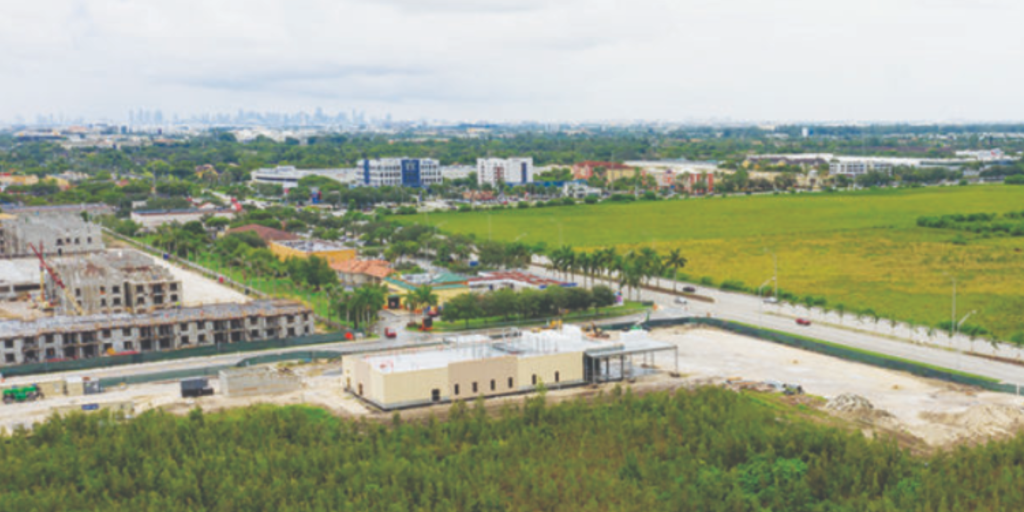
Kendall Regional Medical Center’s new freestanding Doral emergency room will bring residents of the City of Doral much needed emergency care. The Doral ER is well underway and will be ready to go online in early 2019.
The facility will offer immediate 24-hour emergency care, including pediatrics. The 11-bed ER will be ready to aid any major medical illnesses, heart concerns, respiratory issues, neurological issues, environmental issues, and any minor illnesses or injuries.
With its convenient location, the new Doral ER will serve to provide care and treatment for adults and children of all ages, while offering a shorter wait time than a traditional emergency room. The center will be staffed by board-certified emergency medicine physicians and nurses who will be ready to provide quality care for each patient that visits the Doral Emergency Room.
Orlando Health and HCA Healthcare inc. will build a total of three new Central Florida hospitals, thanks to getting approval Dec. 7 from the Florida Agency for Health Care Administration.
Nashville, Tenn.-based HCA (NYSE: HCA) and Orlando Health got the greenlight for their requested new facilities from the August 2018 batching cycle. The approvals are required before any new hospitals can be built.
The general acute-care hospital projects that got the thumbs up are:
• The 100-bed Orlando Health Lake Mary Hospital, planned for a 30-acre site at 380 Rinehart Road in Lake Mary
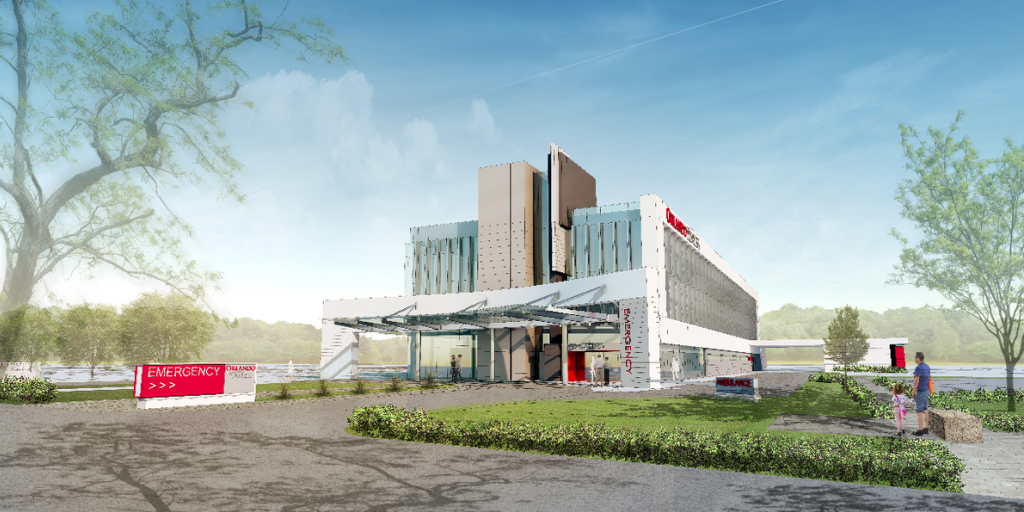
• The 50-bed Orlando Health Randal Park Hospital slated for 9349 Randal Park Blvd. in southeast Orlando
• The 40-bed Central Florida Regional Hospital International Parkway (CFRHIP) to be built at 4525 International Parkway in Sanford
It’s unknown if competitor Florida Hospital, soon to be known as AdventHealth, will appeal these approvals. Florida Hospital executives couldn’t be reached for comment.
Orlando Health, a $3.4 billion nonprofit health care system, on June 18 paid roughly $9.9 million for 15.13 acres of vacant land at the northeast corner of Dowden Road and Randal Park Boulevard for the Randal Park facility. That new hospital will allow the nonprofit to operate in the growing community near Lake Nona, and will reduce crowding at Orlando Regional Medical Center, Orlando Health said in its proposal.
Phase 1 of the project, which would include a freestanding emergency room and outpatient medical office, would start in 2019 and finish in 2020. Phase 2 would have operations begin in 2022. A third phase would allow expansion of medical office capabilities and inpatient facilities, but a timeline wasn’t included.
Orlando Health also is moving forward on its Rinehart Road project, the site of its $42 million, 30-acre freestanding emergency room and medical pavilion now under construction. This new $140 million to $160 million hospital includes 100 acute care beds being delicensed from South Seminole Hospital, Orlando Health spokesman Desmond Jordon told Orlando Business Journal. Renovating the existing South Seminole campus would have cost $310 million to $320 million, and would cause disruption to the services at the facility, Orlando Health said in its proposal.
Phase 1 of the Rinehart Road project is the medical pavilion, which should be completed in August 2019, and operations for Phase 2 are slated to begin in 2022. The second $360 million phase of the hospital will include the patient bed tower, and other health and wellness concepts. Once complete, Orlando Health’s Lake Mary campus will join a growing medical building hub in the area, informally referred to as the Rinehart Medical Corridor.
Meanwhile, HCA’s project will include a new adult psychiatric program with a minimum of 14 beds, according to the proposal. Central Florida Regional Hospital will relocate 21 of its medical/surgical beds and all of its 19 obstetrics beds to the proposed 40-bed facility. The health care provider does not list a timeline nor a projected construction cost for the facility.
HCA is one of the largest, private health systems in Florida, featuring 50 hospitals across the state and 31 surgery centers. Its local facilities are: Central Florida Regional Hospital, Oviedo Medical Center, Osceola Regional Medical Center and Poinciana Medical Center. It also is partnering with the University of Central Florida on the $175 million UCF Lake Nona Medical Center, which will be a teaching hospital slated to open in fall 2020.
/wp-content/uploads/2020/08/florida-medical-space-logo.png00ADMIN/wp-content/uploads/2020/08/florida-medical-space-logo.pngADMIN2018-12-17 01:50:232018-12-17 01:50:23Metro Orlando To Get 3 New Hospitals
Baptist Health South Florida and Boca Raton Regional Hospital announced that they have reached an agreement on a formal Letter of Intent regarding a strategic partnership between the respective organizations. This development marks an important step forward in structuring an agreement that would finalize the affiliation.
“We are most pleased to have achieved this milestone in our discussions with such a prestigious and high-quality healthcare organization,” said Jerry Fedele, President and CEO of Boca Raton Regional Hospital. “It is an exciting development for our Hospital and our community and reflects the hard work and thoughtful interactions of our Ad Hoc Partnership Steering Committee, our Board and Baptist Health leadership.”
Baptist Health is the largest not-for-profit healthcare organization in the region with 10 hospitals and more than 100 physician and outpatient locations from Palm Beach County to the Florida Keys.
“Like Baptist Health, Boca Raton Regional Hospital is a top-ranked organization with a not-for-profit mission and commitment to providing high-quality compassionate care. We are confident that the synergies between our organizations will allow us to better serve our communities and increase access to affordable, high quality care for our patients,” said Brian E. Keeley, President and CEO of Baptist Health.
A Letter of Intent essentially serves as an “agreement to agree” between two parties, clarifies key points in the relationship and is considered as an announcement that the two entities are moving forward in reaching a Definitive Agreement. It is expected that a Definitive Agreement between Boca Raton Regional Hospital and Baptist Health will be executed by early 2019 and the affiliation is expected to be finalized by summer.
Boca Raton Regional Hospital first announced its intent to seek a strategic partner in 2017. Given the growing demand for its services, along with the Hospital’s programmatic and facility expansion and financial performance, it was thought to be an opportune time to seek a partner that would help it sustain and build upon its commitment to accessible, affordable and high-quality care delivery throughout the region. “Our goal was to use our success in recent years to attract other providers and establish a partnership that would enhance our capabilities and mitigate the challenges of a stand-alone hospital in a complex and evolving healthcare industry,” said Fedele.
After issuing a Request for Proposal and receiving responses from some of the nation’s foremost healthcare systems, Boca Regional narrowed its list of suitors to five in the spring of 2018 and then selected Baptist Heath South Florida for further discussions.
“We have now advanced closer to a most important evolution for our Hospital, one that will accelerate and elevate our position as a preeminent academic regional referral medical center,” said Christine E. Lynn, Boca Raton Regional Hospital Board Chair. “It will serve to secure both our goals and objectives and those of Baptist Health South Florida.”
/wp-content/uploads/2020/08/florida-medical-space-logo.png00ADMIN/wp-content/uploads/2020/08/florida-medical-space-logo.pngADMIN2018-12-13 04:16:202018-12-13 04:16:20Boca Raton Regional Hospital And Baptist Health South Florida Agree On Letter Of Intent
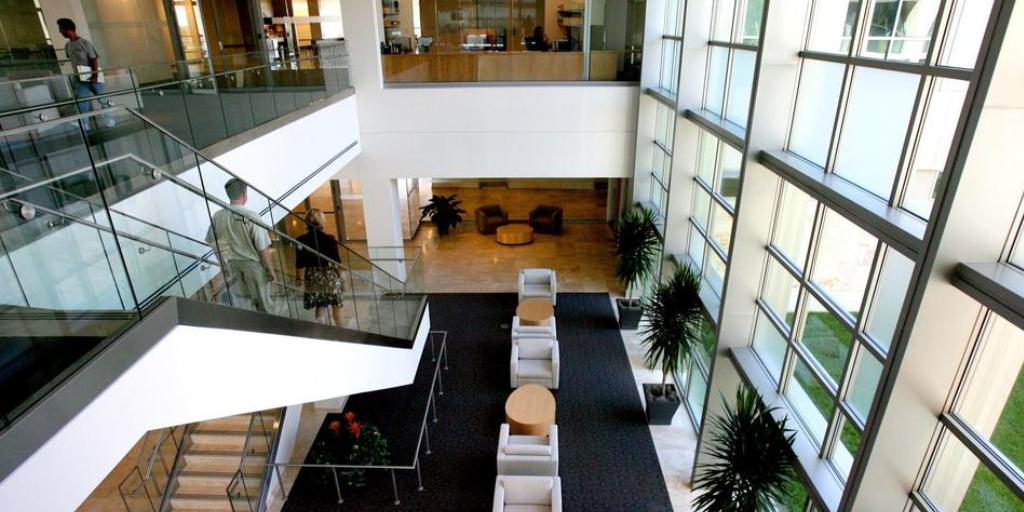
Sanford Burnham’s greatest legacy in Orlando may be the beautifully designed building that’s perched in Lake Nona’s medical city, a stone’s throw from the UCF College of Medicine.
UCF officially took over the 175,000-square-foot facility on December 2 to turn it into a cancer research and treatment facility, closing the book on the research institute’s Florida campus.
In the vast empty spaces of the airy, sunlit building, all Dean Deborah German sees is opportunity — even in a seemingly boring conference room.
“Imagine this as a cancer center. Imagine that we have a cancer symposium coming from all over the community or all over the world,” German said in a recent tour. Let’s imagine that we have a support group for people with a particular type of cancer and we want to hold meetings. Maybe we want them to come for breakfast and we want them to get to know each other. For education, if we have post-doctoral fellows, graduate students, medical students, residents, imagine them all in here talking about the latest in basic research and how that moves all the way to the bedside,” German said.
There will soon be a hospital next door — UCF’s teaching hospital that just broke ground — and this building’s auditorium will make a perfect space for grand rounds.
“I’m grateful to SBP people who built this building because they had a lot of resources and they could build a space like this. … Part of our job is that this is vibrant and this is used all the time,” German said.
She walked through the first-floor cafe area that’s surrounded by windows and greenery. Yet another opportunity for holding conferences. Or maybe students can come over from across the street and study there.
“I can imagine benches out there,” she said pointing at the spaces between the trees. And then, as she walked past the small dining tables, she asked the facilities’ director who was walking along with her to remove the bright artificial flowers that sat in small vases.
“I like flowers. I think these are just … Throw them away in place of your choosing,” she said.
On that November day, only a few people working with Sanford Burnham were left in the building. The one faculty member who was still there had pasted a piece of paper on his office nameplate with his new title at the institution he was moving to.
Most of the equipment was gone.
Some had already followed the researchers who left to destinations like Florida Hospital, Johns Hopkins All Children’s Hospital and the University of Florida. Equipment that was purchased with local money has remained in the facility, including furniture and some lab equipment.
“Some hi-tech equipment was transferred to UCF and additional general research equipment will remain in the building to be used by UCF,” wrote the institute’s spokeswoman Deborah Robison in an email.
One of the building’s crown jewels, the sophisticated drug discovery robotic platform that made up the Conrad Prebys Center for Chemical Genomics, was transferred — not sold, Sanford Burnham officials said — to Discovery Cure Institute, a newly formed nonprofit research institute in Alachua. The company “is focused on finding new treatments for cancer and infectious diseases using its ultra-high-throughput screening and medicinal chemistry capabilities,” according to the forms filed with the state.
Discovery Cure also recruited members of the Sanford Burnham’s drug discovery team, said Robison in the email.
Sanford Burnham Prebys Medical Discovery Institute came to Florida a decade ago with more than $150 million in state incentives and matching funds from Orlando, Orange County and Tavistock. In return, it agreed to create more than 300 jobs in 10 years.
Then, about three years ago, the nonprofit research institute, headquartered in La Jolla, Calif., began planning its departure from Orlando.
It decided to leave because it found the operations to be financially unsustainable, its officials said. The incentive money was running out and the federal funding wasn’t keeping up with the institute’s projections a decade ago, they said.
By then the institute had reached about 87 percent of jobs it had promised and it couldn’t break its contract and leave.
So it first tried to hand off operations to the University of Florida. But that deal fell through. Then it tried to strike a deal with Florida Hospital; that deal also fell through earlier this year.
Eventually, UCF’s proposal won the approval of the stakeholders.
Before the agreements were final, Sanford Burnham owned the building. Orange County currently owns the land.
The institute gave the building to the county for free. In turn, the county will sell the land and building for $50 million to UCF.
UCF, through one of its Direct Support Organizations, will pay the mortgage, without interest, to the county quarterly once it starts receiving rent payments from the building’s tenants, for 30 years.
Orange County will then distribute the money among the funding parties, 43 percent of which will go to the county, 35 percent to the City of Orlando and the rest to Tavistock.
German is planning to fill the building with clinicians and scientists in the next two years. Its name is now official: UCF Lake Nona Cancer Center.
“When I came to UCF, everyone said UCF: it stands for U Can’t Finish and Under Construction Forever. And I didn’t really like either one of those, so I decided that for me personally, UCF is going to stand for U Can’t Fail,” she said.
The university wants to turn the facility into a cancer research and treatment facility with several private partners, including HCA’s Sarah Cannon cancer institute and Provision Healthcare, which specializes in proton therapy.
“And there are other partners but they still don’t want to be named yet,” said German, as she walked the hallways of the building.
Dr. Annette Khaled, a professor and the head of the cancer division at UCF Burnett School of Biomedical Sciences, may be among the first occupants of the building,
“It’s a beautiful design of lab space. It really allows us not just to be in our individual world, but the opposite,” said Khaled, standing on the third floor of the building, where faculty offices sit across from their glass-shielded labs. “Students will be here. Labs will be here. And on the floors below, you’ll have patients and doctors and you have space to meet them. It’s super significant.”
But before all that, German is planning to bring the building back life. She’s hosting a Christmas party there.
“Wouldn’t you? Since the building is completely empty, I don’t want the building to feel lonely like it’s abandoned. [The building] comes with holiday decorations, so let’s start right away,” she said.
/wp-content/uploads/2020/08/florida-medical-space-logo.png00ADMIN/wp-content/uploads/2020/08/florida-medical-space-logo.pngADMIN2018-12-10 02:28:452018-12-10 02:28:45UCF Officially Takes Over Sanford Burnham Building, Will Transform It Into Cancer Research Facility