Florida health care officials are offering $50 million to federally qualified health centers to help offset the costs of care they will provide to poor residents in the coming year.
It’s more money than the centers — which usually provide primary care in communities — have ever been offered under the state’s long-running Low Income Pool, or LIP, program.
But there’s a catch: To tap into it, the federally qualified health centers have to agree to a change that could impact $137 million in “wrap around” funding that’s currently paid to them.
Wrap around payments cover the difference between what managed care plans pay health clinics and the rate the federal government says the clinics should be paid for services. If a managed care plan doesn’t pay a clinic the amount the federal government has set, the state makes up the difference.
Under the special terms and conditions included in a recently approved Medicaid “waiver,” federally qualified health centers that don’t agree to accept the policy change can’t tap into this year’s LIP funding, which also includes money for Florida’s hospitals.
“This is a big change for us compared to all the years we have been participating in LIP,” Andrew Behrman, president and CEO of the Florida Association of Community Health Centers, told The News Service of Florida. “And we don’t want to blindly accept the special terms and conditions that put all the reimbursement through managed-care plans. We’ve had quite a few incidents where we’ve had issues with getting paid.”
Michael Gervasi is the CEO of Florida Community Health Centers, Inc., which operates 12 centers in six counties around Lake Okeechobee. Gervasi said his centers have contracts with about a half dozen managed care plans that participate in the statewide Medicaid managed-care program. He said he has about $400,000 in open, unpaid claims.
“Most of them, I think, are good people trying to do the right thing, but I think efficiency gets in the way,” Gervasi said of his dealings with managed-care plans, which are mostly comprised of health maintenance organizations, or HMOs.
Gervasi said managed-care plans have denied claims for a number reasons, but he primarily blamed the credentialing process. Credentialing is used to evaluate the qualifications, practice histories and educational backgrounds of doctors.
Credentialing can be delayed if a health plan has a difficult time confirming a physician’s educational background, which, Gervasi said, is bothersome, but legitimate. But there are times when the credentialing process is slowed down because it “falls through the cracks” when there’s a change of staff at an HMO.
Though he refused to disclose the name of the plan, one of the managed care plans his centers contracts with has $200,000 in unpaid claims stemming from services provided over the last 18 months, he said.
“I tell my staff every Friday, go to the AHCA (Agency for Health Care Administration) complaint line and make a complaint,” he said.
Armed with experiences like Gervasi’s, Behrman initially shared his reservations with AHCA when he was told in June about the proposed funding changes.
Then the requirement appeared in the special terms and conditions that were part of the Medicaid 1115 waiver, which reauthorized Florida’s Medicaid managed-care program. Moreover, the waiver also reauthorized the Low Income Pool, which uses local contributions to draw down matching federal Medicaid dollars. LIP funding is used to help compensate health care providers for charity care they provide.
Though the federal government authorized up to $1.5 billion in LIP spending annually for the next five years, a top state Medicaid official said a preliminary projection indicates about $790.4 million is expected to be available in the first year, including $50 million for the federally qualified health centers.
Behrman shared his concerns with the media over the summer, and the issue has risen to the attention of the Florida Senate, where it was discussed in a health-care budget committee two weeks ago and will be considered by the full Appropriations Committee this week.
Meanwhile, Behrman met with state Medicaid officials Beth Kidder and Tom Wallace for 90 minutes on Monday to discuss ways to accomplish what the agency wants but to, at the same time, give health clinics assurances they will receive full payment.
“We are working on a solution to try to ameliorate the concerns of the community health centers and to provide us with protections we need to make sure the managed-care companies follow through (on payments),” he said, adding he told Medicaid officials that they can’t “just throw us out there and expect the managed-care companies are going to go ahead and make the payments and there not be any issues.”
To accomplish that, Behrman wants the agency to include protections for the clinics in the contracts it signs with Medicaid HMOs. Comfort language could include a requirement that managed-care plans pay for covered services to Medicaid patients that are provided by Medicaid-participating physicians. It also could include timelines for health plans to complete the credentialing process.
He said Monday’s meeting with Kidder and Wallace was productive and that they will meet again next week to continue to discuss his members’ concerns.
Agency for Health Care Administration spokeswoman Shelisha Coleman wouldn’t comment on the tenor of the meeting but said in a prepared statement that the state “will continue working with everyone to ensure that we have the best models to provide care for families.”
Behrman said he hopes that if the language is included in the contracts between the state and the managed-care plans, the 48 federally qualified health centers he represents will agree to the change. But at the end of the day, he said, each health center will have the ability to decide whether it wants to participate in LIP.
Gervasi said the 12 federally qualified health centers in his organization will qualify for $600,000 under the state’s proposed LIP model. Nevertheless, his health centers may end up walking away from the program this year, he said.
“My (chief financial officer) has already said to me if the managed care companies are responsible for my wrap-around payments, we’re going to lose more money than the $600,000.
The medical office housing the Weston Outpatient Surgery Center was sold for $11.53 million.
Weston Pavilion Partners, managed by Saul R. Epstein in Coconut Creek, sold the 32,559-square-foot building at 2229 N. Commerce Parkway in Weston to Weston Surgery SPE, an affiliate of Nashville-based Montecito Medical Real Estate. Capital One provided an $8.5 million mortgage to the buyer.
The price equated to $354 per square foot.
The medical office building was built on the 3.1-acre site in 1999. It last traded for $6.7 million in 2004.
Since 2005, Montecito Medical Real Estate has acquired a national portfolio of nearly 80 medical office properties valued at more than $1.5 billion, according to its website.
/wp-content/uploads/2020/08/florida-medical-space-logo.png00ADMIN/wp-content/uploads/2020/08/florida-medical-space-logo.pngADMIN2017-11-02 03:17:262017-11-02 03:17:26Surgery Center Sells For $354 PSF
Holding a community meeting with its neighbors proved beneficial for Miami Jewish Health Systems. The Miami Planning and Zoning Board unanimously voted on Tuesday to give the non-profit organization a favorable recommendation for its $200 million plan to redevelop its Buena Vista campus.
Iris Escarra, an attorney representing Miami Jewish Health System, told board members the development team and nursing home officials met with 27 residents on Oct. 7 to address their concerns and agreed to 13 conditions, including increasing the number of times trash is picked up around the property and minimizing the impact of construction dust into nearby homes. Three days earlier, the planning board had delayed its vote after several neighbors complained that Jewish Health System had not done enough to explain its plans.
This time around, no neighbors spoke out against the project. “They were satisfied with the items we provided,” Escarra said. “We are putting it in writing with regard to our commitments.”
The board approved Miami Jewish Health System’s application to rezone its property at 5200 Northwest Second Avenue from “low-density multifamily residential” to “major institutional public facilities.” The nonprofit also won approval for a special area plan, a mechanism allowing property owners of nine or more abutting acres to develop a master plan that includes rezoning that allows for taller structures in exchange for improvements to public and private infrastructure, including quality streetscape designs.
Miami Jewish Health Systems intends to revamp its elderly care campus, which covers more than 20 acres, by tearing down six of the 10 existing buildings and adding new structures, including a three-story complex for housing Alzheimer’s and dementia patients and accompanying garage. The four phase project also calls for a five-story, 140-key hotel and conference center.
Miami Jewish Health Systems officials have previously stated the new three-story building will also include amenities such as a hair salon and a theater that will allow patients with Alzheimer’s and dementia the freedom to move around in a controlled, safe environment.
/wp-content/uploads/2020/08/florida-medical-space-logo.png00ADMIN/wp-content/uploads/2020/08/florida-medical-space-logo.pngADMIN2017-10-29 23:40:112017-10-29 23:40:11Redevelopment Plan For Miami Jewish Health System Campus Wins Planning Board Approval
When it comes to healthcare real estate, legislative threats and significant technological advancement has this sector of CRE optimistically on guard.
Soaring insurance costs, the volatility of the Affordable Care Act and continued efforts to chip away at it has fostered interest in moving healthcare treatments to lower-cost ambulatory care centers. But even if the political future of healthcare is murky, developers view the sector as a blue-chip industry due to growing health interests and needs spanning generations.
“Physicians don’t want to deal with insurance,” Princeton International Properties Corp. President and CEO David Tawfik said. “They would rather be practicing and have someone else handle the business.”
Tawfik’s company has noticed the trend of smaller medical practices consistently getting eaten up by bigger practices and hospitals. Princeton International owns a building at 650 First Ave. where it has seen many physician tenants who were affiliated with New York University simply sell their practices to NYU.
Tawfik blames the trend on both insurance companies and healthcare reform, which he said are interconnected and driving one another’s costs sky high. In other instances, he notices the threat of changes to healthcare has slowed down some deals.
“Folks are sitting on the sidelines,” Tawfik said. “Nobody comes out and says it directly, but I think it has to be it.”
Today’s political climate in Washington is chaotic. Politics, as it pertains to healthcare, is what some could call insane, repeatedly attempting the same action with the hope of a different result. Republicans have failed at multiple efforts to both repeal the Affordable Care Act and replace it with their own reform. President Donald Trump signed an executive order in early October to strip Affordable Care Act subsidies for low-income individuals, but bipartisan support is growing to restore the subsidies and stabilize rising costs.
“It’s an obvious concern if you don’t know if current legislation is going to stay or if there will be changes to the Affordable Care Act,” Tawfik said.
But others do not think further healthcare reform, if it were to ever pass, would drastically impact the surge in ambulatory care and “retailization” of where people get treated by a doctor.
“Whatever does happen in Washington regarding healthcare legislation, it’s unlikely to ultimately diminish the migration of healthcare delivery to outpatient settings like 156 Williams St. and other medical office buildings,” LaSalle Investment Management Managing Director Steve Bolen said.
Bolen’s firm has invested close to $2B in the medical office sector and is in the middle of a medical conversion of a 1950s-era office building in Lower Manhattan at 156 William across from New York-Presbyterian Lower Manhattan Hospital.
The building was 66% leased when LaSalle made the decision to invest with its JV partner, the William Macklowe Organization, in the property in 2015. Since adding several medical tenants from the beginning of the conversion, the building’s occupancy rate has increased to 96%.
“What drove our investment in this particular project was its proximity to what is now the only full-service acute care hospital south of 14th Street, substantial population growth in Lower Manhattan and the scarcity of Class-A medical office product in the submarket,” Bolen said. “The shift to ambulatory care and the need to deliver care in low-cost settings continue to be the primary drivers of demand for medical office space.”
Improved technology in healthcare enables many treatments and even surgical procedures to be offered away from a central hospital in an effective manner. These lower-acuity, off-site centers provide care at drastically lower costs. Inpatient admission costs average nearly seven times the price of outpatient care, according to the Health Care Cost Institute.
“This retailization of medicine and the repurposing of alternative real estate into medical space is drawing significant interest from investors as healthcare real estate is now a recognized asset class,” The Corcoran Group’s Wexler Healthcare Properties Team Associate Broker Paul Wexler said.
Changing demographics and interests are also a boon to healthcare real estate. The sizable number of aging baby boomers presents a demand for more healthcare facilities as the generation matures into the years when doctor visits become more frequent. Even millennials are fueling demand, as the younger generation places more emphasis on preventive healthcare and wellness.
“The combination of aging baby boomers, millennials’ interest in preventative healthcare and wellness and rapidly evolving healthcare technology provide a solid foundation for the entire industry,” Wexler said.
/wp-content/uploads/2020/08/florida-medical-space-logo.png00ADMIN/wp-content/uploads/2020/08/florida-medical-space-logo.pngADMIN2017-10-25 20:22:142017-10-25 20:22:14Politics Or Not, Developers Think Healthcare Real Estate Is A CRE Blue Chip
Despite their small physical size, microhospitals are fast becoming a big thing in health care design.
Historically, hospital construction has been based on the premise of “build it and they will come,” says David Argueta, president and CEO of CHI St. Luke’s Health — The Woodlands, Lakeside and Springwoods Village hospitals. Inpatient beds have in large part defined a hospital or health system. “When we talk about health care systems and hospitals, part of the statistic is how many beds we have,” Argueta says.
Today, priorities are shifting toward “driving the cost of health care down and building ambulatory access points that are focused on who we serve — really focused on the patient experience and their journey through health care. Finding a way to do that in a lower-cost environment — that’s what everyone’s trying to do,” he says.
Microhospitals can be distributed throughout a region to support a network of care; they also can be designed to be scalable, to grow along with a burgeoning community. According to Argueta, microhospitals are an innovative solution to delivering hospital care where it’s needed, to meet a health care organization’s strategic goals and its mission as a care provider.
In short, efficient, well-placed microhospitals can achieve the health care trifecta of “best value, high quality, lower cost,” he says.
Convenient and Accessible
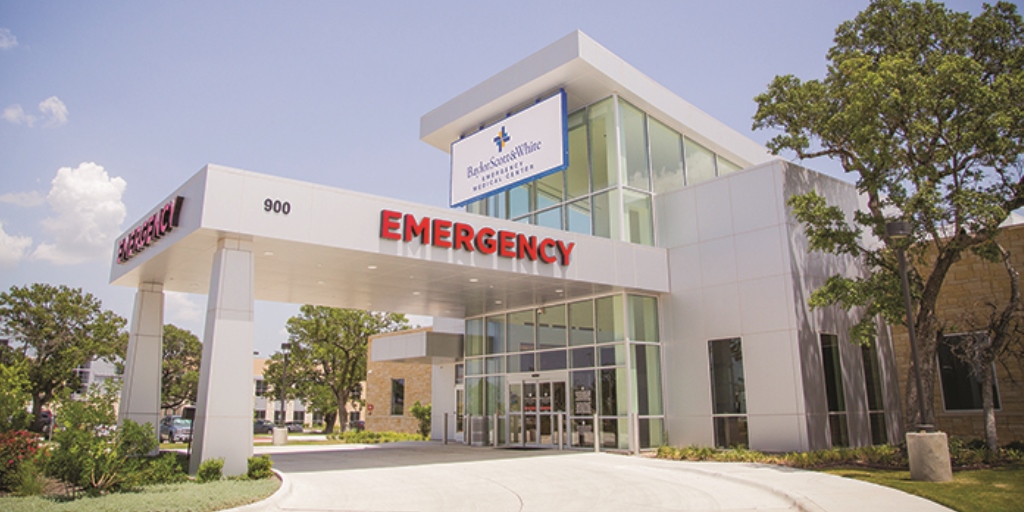
Microhospitals generally fall between 15,000 and 25,000 square feet, though they can be upward of 50,000 or 60,000 square feet in size, says Kevin Harney, principal at architecture firm ESa in Nashville, Tenn. They typically include eight to 10 inpatient beds, eight to 10 emergency department treatment bays, a small imaging and diagnostic suite and support functions like dietary services, environmental services and materials management.
These facilities perform essentially the same functions as standard-sized hospitals but are scaled to respond to the needs of lower-acuity patients, explains Rod Booze, partner in the Texas office of health care architecture firm E4H.
Besides size, the primary difference between a microhospital and a larger community or tertiary care hospital is that microhospitals do not provide services like intensive care.
“Microhospitals cater toward the noncritical patients,” Harney says. “If a patient’s going to be there more than 48 hours, the provider will transfer [him or her] to a larger hospital. They’re trying to take the less-acute patient who needs a hospital stay and needs to be cared for but who doesn’t need to go to the larger tertiary hospital.”
PhiloWilke Partnership in Houston has designed approximately 25 microhospital facilities in the last eight years, with 20 more on the books, according to Kevin TenBrook, a partner at the firm. “It’s definitely expanding at the moment,” he says of microhospital design and construction.
TenBrook describes PhiloWilke’s typical microhospital as less than 20,000 square feet, with a full-service ED. These buildings are generally in suburban areas, 30 minutes or less from a primary hospital campus, so patients who require high-acuity care can be transferred quickly to a setting appropriate to their needs.
“The microhospitals we do are very much portal-type facilities, meaning they’re a way to get the hospital service out where the people live, out in the communities,” TenBrook explains. He adds that most projects include medical office space for physicians who practice at the hospital or are related to the health system.
Microhospitals tend to be on highly visible sites in their communities.
“From a project location or siting point of view, these are retail facilities,” TenBrook says. “One of our clients once said, ‘We expect a typical future patient to have driven by one of our facilities 100 times before they walk in the door.’”
With microhospitals, providers are “trying to create something convenient and accessible,” Harney adds.
Scalable Design
Springwoods Village Hospital is a microhospital designed by ESa for CHI St. Luke’s as part of the new Springwoods Village master-planned community in Spring, Texas, within the extraterritorial jurisdiction of Houston. The facility comprises 50,000 square feet of hospital space and 100,000 square feet of medical office space.
“It becomes almost a one-stop shop for health care, when you think of primary care and multispecialty groups and dentistry alongside our hospital services. That’s what we were trying to create,” says Argueta.
The hospital portion of the facility includes four inpatient beds, four operating rooms, two endoscopy suites with associated preoperative staging and post-anesthesia care areas, a full diagnostic imaging suite with computed tomography, radiology, magnetic resonance imaging and nuclear medicine capabilities, and a 10-bed ED.
The microhospital, on a 26-acre site, is master-planned to expand over time into a 200- to 300-bed tertiary care hospital. The scalable design is meant to serve the immediate and long-term needs of the community, Argueta says. By starting with a microhospital, “you’re able to grow intelligently. You don’t have 100 or 200 beds to start out with. You may have four to 12 beds and concentrate on more procedural areas,” he says.
This type of phased development makes efficient use of resources and gives local residents the comfort and convenience of having access to both nearby health care services and a larger network of care, he notes.
Argueta explains that CHI St. Luke’s, which historically has been inpatient-focused, recently has concentrated on developing facilities to serve patients along the entire continuum of care. The health system now has nearly 50 access points and almost 100 physicians in the North Houston area.
“We consider [Springwoods Village Hospital] a part of the continuum,” he says. While the microhospital can handle most patient needs, The Woodlands Hospital, CHI St. Luke’s flagship facility in North Houston, is a comprehensive stroke center that can provide higher-acuity care for patients who require it. The health system’s facilities are complementary, Argueta says.
Neighborhood Hospitals
Dignity Health–St. Rose Dominican health system has been working with Houston-based microhospital developer Emerus and other partners to implement a microhospital strategy in Las Vegas. The health system has opened three microhospitals so far this year, and another is in the works.
The first floor of each Dignity Health–St. Rose Dominican microhospital, designed by PhiloWilke, includes eight inpatient beds and a similar number of emergency treatment and triage rooms, along with computed tomography, laboratory, X-ray, ultrasound, pharmacy and dietary services.
“Each location has either one or two additional floors that are purposed for Dignity Health–St. Rose Dominican’s other clinical services,” says Vic Schmerbeck, executive vice president of strategy and business development for Emerus. These include primary care, wellness centers and other specialty clinical services.
The microhospitals are located on sites that range from 3 to 7 acres. “They are highly visible and accessible for patients,” Schmerbeck says. “All of them sit on hard corners in retail-centric locations, to provide great access for patient care in areas we believe have needs in the marketplace.”
“We’re calling them neighborhood hospitals. They are fully licensed, Centers for Medicare & Medicaid Services-certified facilities capable of providing a continuum of care, albeit at a lower acuity level than some of our larger, more complex facilities,” says Peggy Sanborn, vice president, partnership integration, Dignity Health. “They’re generally distributed to better serve the overall population in Las Vegas, particularly as we migrate as an organization to value-based contracts and at-risk contracts.”
Population health management was a key factor in the health system’s decision to deploy microhospitals in this manner, Sanborn says. “First of all, we’re able to provide access to care that’s most commonly accessed at hospitals, which is predominantly outpatient-oriented, through this lower-cost model. So it preserves on capital and expenses as it relates to creating access points for patients.”
Additional access points help to prevent bottlenecks to care.
“Many times in communities that are under-resourced, you have long waits for emergency services,” notes Sanborn.
The neighborhood hospitals will provide needed services and allow Dignity Health–St. Rose Dominican to keep patients in network as the health system moves forward with some of its more narrow-network or value-based population health-oriented contracts, she says.
According to Sanborn, co-locating outpatient diagnostics and physician services on the microhospital sites creates “minimedical campuses” where local residents can receive primary care, outpatient care, emergency treatment or a short-stay, acute care inpatient admission.
She says that Dignity Health–St. Rose Dominican has developed resources to transfer patients with more complex medical needs in a timely and effective manner to hospitals within the system that provide higher levels of care, and for the system’s medical staff and management team to coordinate care for patients across the entire network.
Health Care Evolution
“What we’re trying to do is evolve our health care thinking and make it much more community-facing, so that patients feel [as though] we’re delivering the product to them,” Sanborn says. “We’re starting to look at how you address the way patients want to access care.”
Millennials want convenience and immediacy in care resolution, she notes. “We want to be evolving or thinking about health care delivery in a similar way,” she says.
Microhospitals enable health care organizations to provide “great care in a patient-friendly and convenient manner, while remaining disciplined on capital and operational efficiency,” Schmerbeck adds.
/wp-content/uploads/2020/08/florida-medical-space-logo.png00ADMIN/wp-content/uploads/2020/08/florida-medical-space-logo.pngADMIN2017-10-23 00:58:122017-10-23 00:58:12Health Systems To Build Microhospitals To Fill Community Gaps