The past five years have seen a shift in healthcare toward leaner facilities design. For example, more micro-hospitals –small-scale inpatient facilities with eight to 15 short-stay beds-are popping up these days in an industry dominated by megahospitals. Nineteen states and counting now have at least one micro-hospital.
In addition to hospital downsizing, a shift in senior living toward smaller communities is taking place, and, due to consumer demand and rampant retirement insecurity, there’s an anticipated shift toward micro-sizing individual units within assisted living facilities.
Smaller Footprint, Lasting Impression
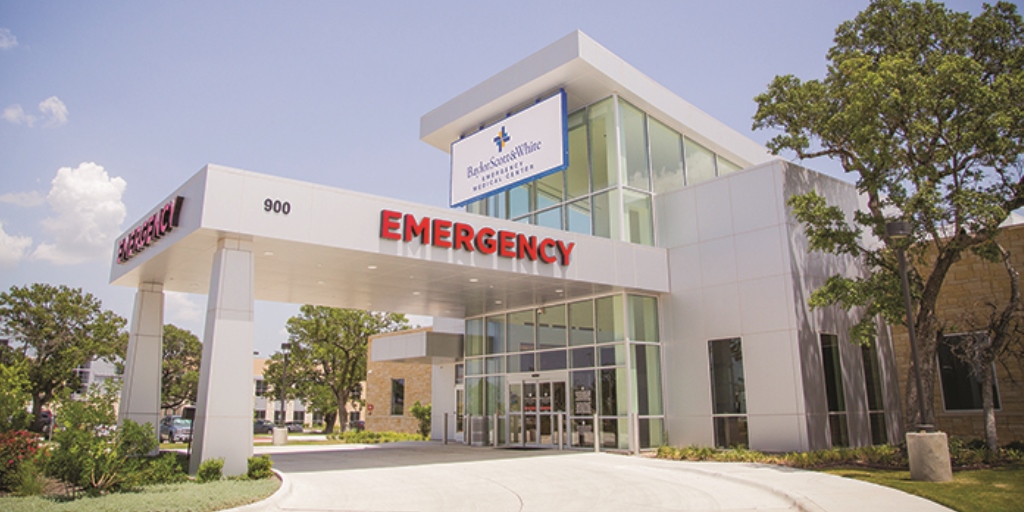
Micro-hospitals are fully licensed hospitals that meet a need not met by urgent care centers or freestanding emergency departments, neither of which offers inpatient care. Looking to fill a niche, micro-hospitals generally offer services in accordance with community needs.
Micro-hospitals have been described as “no-frills” facilities and are often positioned as a way to cut healthcare costs. At the same time, they offer patients the promise of a premium experience through personalized care. Industry experts claim that the smaller hospital format fosters patient satisfaction and better outcomes.
A Real House, Not a Warehouse, for Seniors
Seniors these days don’t want to live in what has been labeled as “geezer ghettos,” nor will they settle for institutional-looking living facilities. Increasingly, assisted living services are being offered in residential care facilities, located in converted homes with onsite or live-in caretakers and anywhere from two to 10 residents. They provide for a homey environment within a traditional neighborhood. Moreover, a smaller community and care-provider-to-resident ratio allow homes to cater to distinct needs and demographics, such as shared dietary restrictions or religious affiliations.
A new pilot project at The University of Southern Indiana is advancing the idea of “aging in community,” which recognizes that seniors who have special housing requirements don’t want to be segregated from the rest of society or warehoused in institutional settings. The MAGIC Project will create a multi-ability, multi-generational, inclusive community (MAGIC) housing model shared by college students and older adults. The project starts with a MAGIC Model House on or near campus and will eventually develop a model framework for building multi-generational, inclusive communities. The concept for a pod-type MAGIC community could be implemented on a university campus or in a community setting.
Downsizing in a Big Way
It wasn’t long ago that “bigger is better” was the prevailing trend in assisted living facility design. Between 2006 and 2009, the number of apartments in assisting living communities decreased from a nationwide average of 63 to 54, reflecting a practice of combining two units to accommodate residents who preferred larger living spaces. At that time, one-bedroom units surpassed studios as the preferred ALF floorplan, allowing residents to keep more of their belongings, which made them feel more at home.
A decade later, feeling “at home” may not hold the same appeal. A 2014 report from the Joint Center for Housing Studies at Harvard University found that the majority of seniors over 50 live in single-family suburban homes. And though the aging-in-place movement would have them stay there as long as possible, what happens in a lot of cases is seniors end up being stuck and isolated in large homes with yards they can no longer maintain, in car-dependent locations past the point when they can safely drive.
The need for accessibility and connectivity may drive a shift toward micro-apartments (generally under 400 square feet) in assisted living facilities located in urban or urbanist environments. Less space and stuff to take care of translates into more leisure time and, potentially, higher activity levels and more engagement. Aligning assisted living and micro-living makes sense not only in terms of engagement but also affordability.
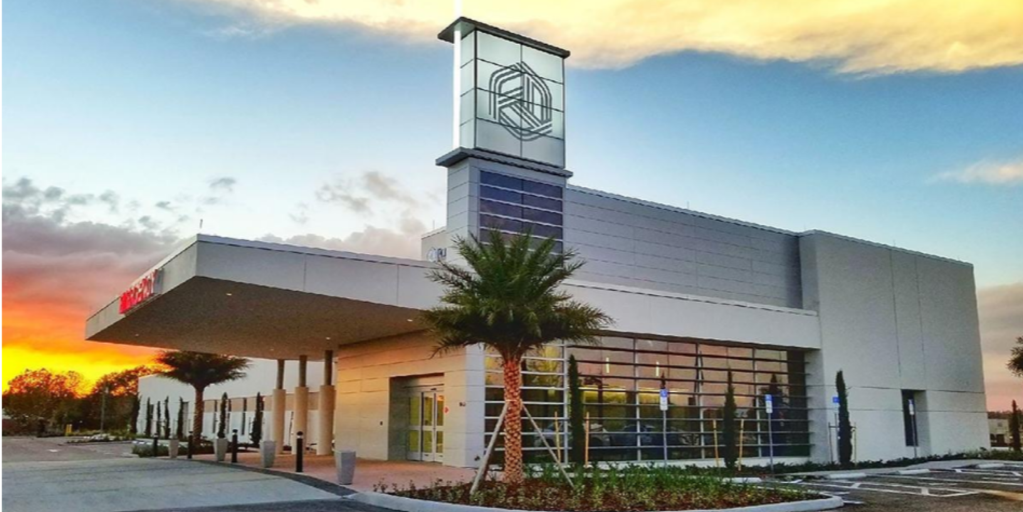
Plans are on the drawing board to open a free-standing emergency department in early 2020 on the property that Adventist Health System/Florida Hospital bought last year alongside Interstate 4 just west of Florida Polytechnic University.
Construction is expected to start in early 2019, according to Mike Schultz, chief executive officer of the West Florida Division of Adventist Health.
Demographic and population growth analyses are underway to determine whether to build a 12-bay or 24-bay emergency department, he said.
“We are in the process of planning a 10-year trajectory” that eventually is expected to include a full-scale hospital, Schultz said.
Adventist, a faith-based, nonprofit health care organization, is headquartered in Altamonte Springs and has 46 hospitals in nine states. In Florida, it owns 27 hospitals, and although it has hospitals across Central Florida, none is in Polk County. It also operates two stand-alone emergency departments in the Tampa area, three in the Orlando area and has plans to build three more within two years in the West Division area (Lakeland, Brandon and West Chase).
A stand-alone emergency department is a lower-cost entry into the Polk County market than a full-scale hospital, Schultz said.
“A hospital requires a certificate of need from the state, but an emergency department does not,” Schultz said. “We can present for a hospital later on when there is a proven need for in-patient beds.”
In August, Adventist Health paid $14,750,100 for three adjacent tracts of land totaling 104.1 acres between the interstate and University Boulevard in northeast Lakeland.
“The idea behind the purchase was anticipation of the rapid growth everyone sees coming to the Orlando and Tampa corridor along I-4,” said Schultz, who noted the tract has plenty of space for expansion into a full-service hospital.
Emergency Department
“All our free-standing EDs (emergency departments) are built in similar fashion and vary between 12 and 24 beds,” said Richelle Hoenes-Ahearn, director of corporate communications Florida Hospital, West Florida Division.
Free-standing emergency departments are staffed and equipped to care for patients in the same fashion as emergency departments attached to hospitals and must have CT scans, ultrasound, X-ray and on-site laboratory, Hoenes-Ahearn said. They treat patients for life-threatening illnesses or injury, such as heart attack, extreme fever, head injury or loss of limb, she added.
Patients with major trauma will still have to be transported to a Level I trauma center — in Central Florida, those are Tampa General Hospital and Orlando Regional Medical Center — or a Level II trauma center — in Central Florida, those are Lakeland Regional Health, Osceola Regional Medical Center in Kissimmee and Bayfront Health in St. Petersburg.
Hospital Projection
When Adventist representatives approached Lakeland city commissioners in July about the prospect of building a hospital within city limits, their proposal was a 200-bed facility.
That is still the size projected for when Adventist moves to the hospital-building stage, Hoenes-Ahearn said.
For comparison purposes, Heart of Florida Regional Medical Center in Haines City is licensed for 193 beds and Lake Wales Medical Center for 160 beds.
The hospitals closest to the Adventist property — Lakeland Regional Health, at about 9 miles away, and Winter Haven Hospital, at about 12 miles away — are licensed for 859 beds and 519 beds, respectively.
“We grew out of Orlando; that was our hub and base for 100 years,” Schultz said. “We merged with a major health system in Tampa in 2011, University Community Health, so we grew in that market. We have been in Avon Park for probably 25 years. It was not intentional to not be in Polk County before this. But as we see the population growth along the I-4 corridor, we feel the need to be there for residents who choose Florida Hospital.”
Nearby, Florida Hospital/Adventist operates hospitals in Celebration, Zephyrhills, Wesley Chapel, Carrollwood, Land O’Lakes, Apopka, Avon Park/Sebring, Wauchula and Altamonte Springs.
This year, Adventist purchased hospitals in Dade City and Ocala from the large, national for-profit chain Community Health Systems, which has been selling off hospitals nationwide in an attempt to improve its financial outlook.
Schultz said that Adventist has not been in negotiations to buy either of the CHS-owned hospitals in Polk County — Heart of Florida or Lake Wales Hospital.
Competitor’s Response
Steve Nierman, president of Winter Haven Hospital, said in a statement Florida Hospital’s plan does not affect the strategy of BayCare Health System in Polk County.
″Our strategy is mission-driven and carried out through our three hospitals, Bartow Regional, Winter Haven and Winter Haven Women’s, as well as through the many BayCare Medical Group practices, outpatient lab facilities, BayCare Urgent Care Centers and BayCare Home Health,” Nierman said. “We also continue to add convenient access with our Publix partnership, opening a Walk-In Care center at the south Lakeland Lake Miriam Square Publix in March, and another at the Haines City Mall next week.”
“Polk residents have many options for their health care needs,” Nierman said. ” Our role is to listen to those needs and make decisions based on them.”
Representatives from Lakeland Regional Health did not respond to a request for comment Thursday.
/wp-content/uploads/2020/08/florida-medical-space-logo.png00ADMIN/wp-content/uploads/2020/08/florida-medical-space-logo.pngADMIN2018-05-23 21:23:092018-05-23 21:23:09Florida Hospital To Build Free-Standing Emergency Department In Northeast Lakeland
After a nine-month process, an administrative law judge approved construction proposals from two rival healthcare organizations — clearing the way for both providers to build a hospital in Venice, Fla., according to the Sarasota Herald-Tribune.
Here are nine things to know.
1. The law judge approved Sarasota (Fla.) Memorial’s proposal for a 90-bed hospital and Venice Regional Bayfront Health’s proposal for a 210-bed replacement facility.
2. The Florida Agency for Health Care Administration previously approved the construction projects for both organizations in December 2016. Less than a month after state approval, both healthcare organizations submitted a challenge against the other’s proposal.
3. The hearing about the projects took place in summer 2017, with weeks of testimony and more than 180 lengthy legal filings from each side. The judge’s ruling ended the nine-month legal battle.
4. In an 89-page order, Judge W. David Watkins upheld the state agency’s decision to approve both applications.
5. In his ruling, Mr. Watkins wrote that Sarasota Memorial’s evidence pointed to a need for the 90-bed hospital “based on the proposed service area’s growing population, SMH’s existing patient base in the proposed service area, and the need to improve geographic and financial access for service area residents who are currently traveling great distances to access inpatient services at the SMH main campus.”
6. Additionally, Mr. Watkins said Venice Regional’s project will allow for additional services in Venice, including a heart valve replacement program and enhanced neurosurgical and stroke care.
7. Both systems released statements about being pleased to move forward with construction.
8. The judge’s decision sends the case back to the Florida Agency for Health Care Administration for final approval. The state agency is expected to affirm its earlier approval.
9. The battle between the two systems over care delivery in south Sarasota County has been publicized for more than five years, according to the report. The saga began when Sarasota Memorial moved to open an urgent care facility a mile from Venice Regional.
/wp-content/uploads/2020/08/florida-medical-space-logo.png00ADMIN/wp-content/uploads/2020/08/florida-medical-space-logo.pngADMIN2018-05-20 19:37:142018-05-20 19:37:142 Rival Healthcare Providers To Build Hospitals In Same Florida City
Nicklaus Children’s Hospital, the only pediatric trauma center in Miami-Dade County, is suing the state to challenge a law that would permanently allow another hospital to operate a competing trauma center without having to undergo the same kind of scrutiny, saying that the competition could functionally put Nicklaus’ facility out of business.
Nicklaus filed a lawsuit late last week against the state Department of Health to stop Kendall Regional Medical Center, which is owned by the Hospital Corporation of America, from operating as a Level I trauma center in the region. The department regulates which facilities have approval to operate as trauma centers, which treat the most serious injuries like gunshot wounds and severe burns.
The lawsuit, filed in Leon County circuit court, contends that part of the law — which was passed in March — violates the state Constitution by being written so narrowly that it amounts to a “special law” for Kendall alone. State statute requires that lawmakers notify the public in advance or hold a referendum for voters in the area before pushing through a law that grants a benefit to a private corporation.
A provision in the law requires the state to grant Level I trauma status to any center that had provisional approval for that tier before January 2017 but still did not have final verification by December. Kendall was granted provisional authority as a Level I trauma center in May 2016, though Nicklaus Children’s Hospital — which is part of the Miami Children’s Health System — had challenged the initial approval.
The new law would make Kendall’s trauma status permanent without the facility being required to go through a review or an on-site verification survey, attorneys said.
The lawsuit claims the law allows the Kendall trauma center “to automatically bypass in-depth review, including a determination of need, and to receive the department’s final approval as a Level I trauma center without meeting the same requirements and standards, and undergoing the same approval process, as other hospitals.”
Lawyers for Nicklaus also claimed that allowing Kendall to permanently operate as a Level I center would so limit Nicklaus’ coverage area and revenue that “the predicted volume reduction would amount to a constructive closure of [Nicklaus’] pediatric trauma program.”
Competition from Kendall, attorneys wrote, would drive up demand for a limited number of trauma personnel. Some pediatric patients have already been diverted to Kendall, which is a few miles away, the lawsuit added — the volume of Nicklaus’ trauma alerts during 2016-2017 decreased by 30 percent, according to hospital director of governmental relations Lani Ferro. Nicklaus “is likely to suffer irreparable harm because any final approval of Kendall’s Level I status, and the significant damage flowing therefrom, cannot be undone,” the suit alleged.
“This special law is devastating to the standard of care for the region’s children,” Narendra Kini, CEO of Nicklaus Children’s Health System, said in a statement. “Furthermore, this law will only fragment trauma care and decrease pediatric subspecialty expertise, as pediatric trauma centers afford children a better chance at survival.”
Kendall Regional Medical Center and Hospital Corporation of America — better known as HCA — did not respond to requests for comment.
The legislation including the clause for Kendall was a broad-reaching bill that sought to overhaul the state’s trauma system after years of lawsuits over various facilities in the state — in part as HCA has opened trauma centers at its own hospitals.
Hospitals with more established trauma centers have long fought approvals for new centers, arguing that too many facilities would cut into a limited number of cases and lessen the amount of practice their providers get treating complicated injuries. HCA has argued in the past that adding more facilities expands access to care for seriously injured patients.
State Sen. Dana Young, R-Tampa, who shepherded through the compromise legislation, said the trauma bill was a “nice balance of all competing interests” that had sought to resolve several disputes by grandfathering in facilities that had already received provisional approval from the state or those that had received verification and had their status challenged.
“It wasn’t like picking one or two or leaving others out. We tried to be very consistent,” she said. “The bill took a broad brush in order to get our trauma center statute back on track.”
Kendall was among about half a dozen facilities that were subject to similar grandfathering clauses to resolve their trauma status, according to a final bill analysis. Included was Aventura Hospital and Medical Center, another HCA facility, which had received final approval as a Level II trauma center but had its status disputed by Jackson Memorial Hospital.
Ferro said Nicklaus was not included in the crafting of the bill and began meeting with lawmakers in February to object to the grandfathering provision that was eventually adopted. The law was passed unanimously by both chambers and signed into law by Gov. Rick Scott, a former HCA executive.
Representatives for Nicklaus at the time “didn’t want Kendall approved under any circumstances,” Young added. “I didn’t think that was an appropriate resolution.”
The law also added a strict need formula that would make adding any additional new trauma centers beyond those grandfathered in more difficult. It also reduced the number of “trauma service areas” to 18 regions and created an advisory council to propose criteria for future approvals.
/wp-content/uploads/2020/08/florida-medical-space-logo.png00ADMIN/wp-content/uploads/2020/08/florida-medical-space-logo.pngADMIN2018-05-18 02:31:172018-05-18 02:31:17Nicklaus Children’s Hospital Challenges Law Allowing Trauma Center Without Full Review
The ancient Roman poet Virgil once said, “The greatest wealth is health.” And those in contemporary times increasingly agree—a 2017 study by the Global Wellness Institute (GWI) found that wellness real estate is now a $134 billion industry. Katherine Johnston, a senior researcher at GWI, says the wellness economy has experienced a consistent upward trajectory in the last 10 years. It is expected to increase by 6 percent annually in the next several years. Residential buildings and communities are ideal for city dwellers and those seeking all-inclusive amenities at their fingertips, but these environments directly impact our health and happiness—proving our sustained well-being begins at home.
Real estate and tech firm Delos, led by Paul Scialla, developed the WELL Building Standard under the International WELL Building Institute, which is a series of comprehensive measures that sets the bar for healthy living through improved air quality, sleep cycles, cognitive functions, and immunity within the habitat.
“We are committed to an evidence-based approach that looks at how the built environment can be used to impact and influence the human condition,” Scialla says.
The institute has certified over 800 projects that integrate air filtration, anti-mold and anti-microbial surfaces, chemical-free materials, lighting that follows the body’s natural rhythms, and consistent water filtration evaluation.
One such new wellness edifice is set to hit sunny Palm Beach, Fla., late next year. Amrit Ocean Resort & Residences—a glass-encased oceanfront tower inspired by the yogic philosophy of mindfulness—was envisioned by Dilip Barot, the founder of Creative Choice Group.
“These consumers define wellness for themselves, using inner science with research and technology to determine their best lifestyle,” says Barot.
Meditation, fitness, and thought management classes are offered along with a personal wellness assistant available 24/7 to customize programs and cater to specific health needs for every resident. The building incorporates heat reflexology floors for posture support, a spa and hammam for purification and detoxing, and mood-boosting aromatherapy.
Consumers are demanding healthier-built homes and residences around the world, with 60 percent of Americans willing to pay more for wellness-designed estates over traditional ones, according to GWI. Perhaps the truest luxury is the discernment to cultivate a lifestyle for both mind and body to thrive.
/wp-content/uploads/2020/08/florida-medical-space-logo.png00ADMIN/wp-content/uploads/2020/08/florida-medical-space-logo.pngADMIN2018-05-16 00:19:142018-05-16 00:19:14Why Wellness Real Estate Is Now A $134 Billion Industry