
Lee Health’s New Fort Myers Campus Signals Southwest Florida’s Next Era Of Healthcare
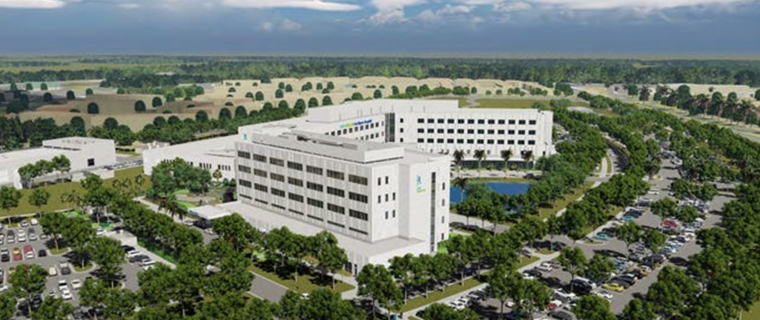
Lee Health’s topping-out milestone in Fort Myers is more than a construction update. It is a visible sign that Southwest Florida is making a long-term bet on how healthcare will be delivered in the years ahead.
At one level, the project is straightforward: Lee Health has placed the final structural beam on its new hospital tower at 4453 Challenger Boulevard, advancing an $824 million campus that is expected to open to patients in fall 2028. At a deeper level, though, this is a story about growth, risk, and the changing shape of care in a region that has been forced to think hard about both capacity and resilience.
What stands out first is scale. This is being described as Southwest Florida’s largest healthcare construction project to date, and that matters because large hospital investments do not happen in a vacuum. They usually signal a health system’s conviction that future demand will justify not just new beds, but an entirely different care platform. Lee Health is clearly building for a larger, more medically complex, and more geographically dispersed population.
That makes this project as much a population-growth story as a healthcare one. For years, Southwest Florida has been absorbing new residents, retirees, and seasonal demand, all while trying to keep pace with infrastructure needs. A major replacement hospital suggests Lee Health sees the existing model as insufficient for what the region is becoming. As CEO Dr. Larry Antonucci has framed it, the investment is tied to that growth challenge. In practical terms, this is a response to where people are moving, how they want care delivered, and how quickly an older flagship facility can become outmatched by modern expectations.
The replacement of Lee Memorial Hospital may be the most important part of the story. Closing a hospital with roots going back to 1916 is not just a real estate decision or a facilities upgrade. It reflects a broader shift away from the legacy hospital model built around volume and toward one centered on privacy, specialty care, outpatient procedures, and integrated technology. Even though the new campus will open with fewer operational rooms than the current Lee Memorial bed count, the strategy appears to be about efficiency and acuity, not just size on paper.
That is where the project becomes especially relevant beyond Fort Myers. Across Florida and nationally, health systems are rethinking the role of the acute-care hospital. The future is looking less like a single giant inpatient box and more like a coordinated ecosystem: private rooms, ambulatory surgery, specialist clinics, digital systems, and emergency capacity all working together. Lee Health’s inclusion of a major musculoskeletal component, outpatient surgery infrastructure, and specialty clinics shows it is not simply replacing an old building. It is repositioning its service model.
There is also an unmistakable post-Ian lesson embedded in the design. In Southwest Florida, resilience is no longer an add-on feature for a hospital campus. It is core infrastructure. The elevated site, Category 5 rating, backup power, and redundant water systems speak to the hard reality that a hospital must remain functional when the rest of a region is under stress. That may end up being one of the project’s most important features. In a storm-prone state, healthcare construction is now inseparable from disaster planning.
The local angle is significant not only in healthcare terms but economically. Lee Health says the project will rely heavily on Southwest Florida contractors, which means the buildout should circulate dollars through the regional construction and vendor base over several years. Mayor Kevin Anderson’s support points to the larger civic view: this kind of campus can become an economic anchor, not just a treatment site. Large medical projects often attract related services, professional offices, hospitality uses, and support businesses. The mention of a possible on-campus hotel is a reminder that major healthcare destinations increasingly function like mini districts rather than stand-alone hospitals.
Still, there are questions worth watching as the project moves toward opening. One is transition risk. Replacing a century-old hospital is operationally and emotionally complex, and the public conversation will eventually need to address what happens to the Cleveland Avenue site, how services shift, and whether all patient populations will experience the move as an upgrade in access. Another is whether the lower opening-day room count relative to the existing Lee Memorial footprint will prove sufficient if regional growth continues at its current pace.
What is somewhat missing from the headline celebration is the affordability and workforce dimension. New buildings can improve care environments, but they do not automatically solve staffing shortages, physician recruitment challenges, or the cost pressures facing patients and providers alike. A modern campus can expand capability, but the long-term success of the investment will depend on whether Lee Health can match physical infrastructure with the people and operating model needed to sustain it.
That is why this topping-out matters. It marks more than construction progress. It shows Southwest Florida trying to build a healthcare platform that is newer, harder to disrupt, and more aligned with where medicine is heading. The beam at the top of the structure is symbolic, but the real test will come later: whether this campus can translate scale, resilience, and design ambition into better access and better outcomes for a fast-changing region.
Source: Construction Review
For more information contact us:
954.346.8200 x 201

